Supply-Line and Plumbing Leaks
A failed appliance hose, fixture connection, or pressurized pipe can release water quickly. The work includes stopping additional spread, extracting water, and checking nearby walls, cabinets, and flooring.
Serving Long Beach, California & surrounding areas
Prompt extraction, controlled drying, and clear documentation help limit the spread of water after a leak, overflow, or supply-line failure.
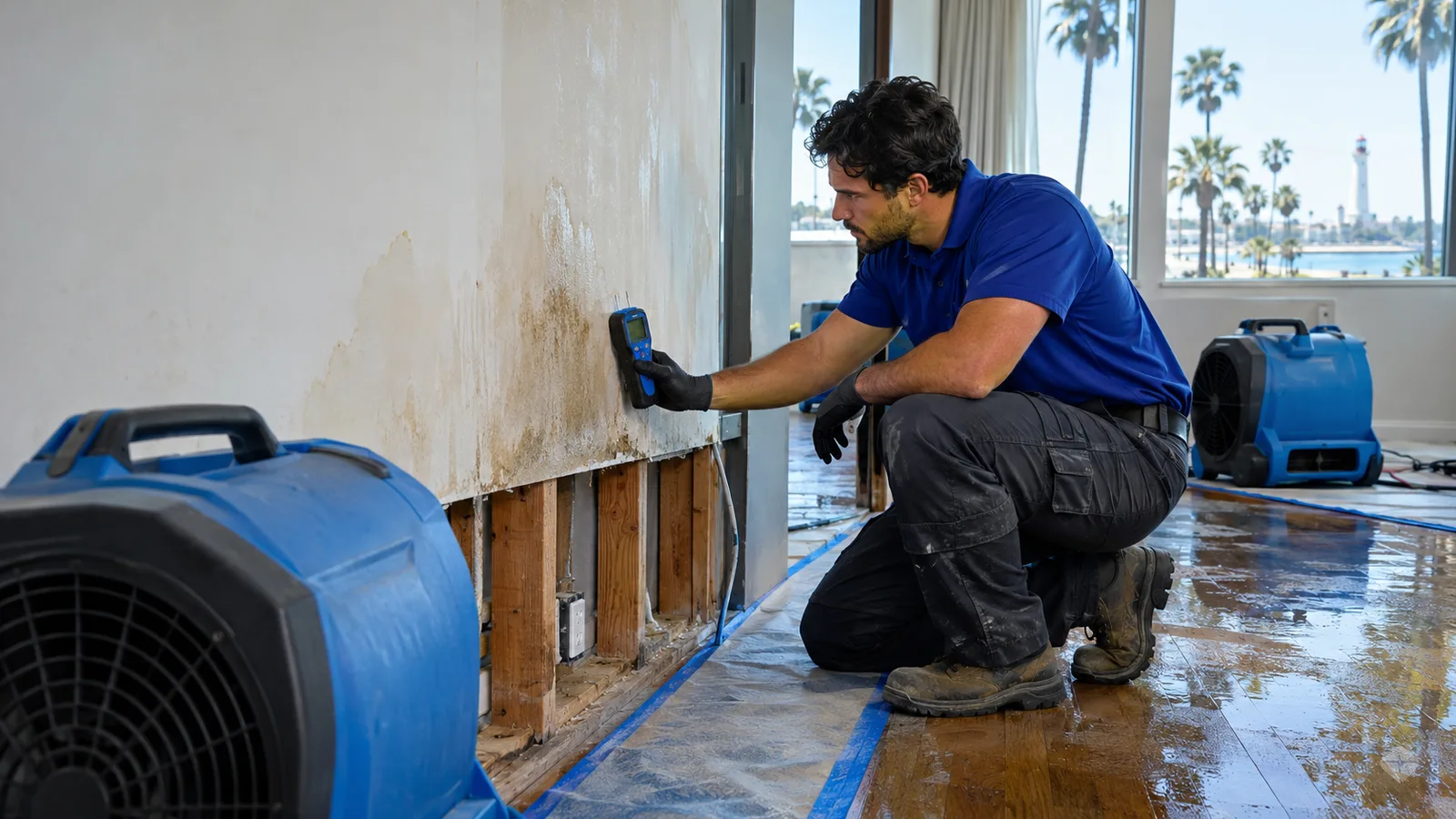
Water mitigation in Long Beach, CA starts with stopping further water entry when that can be done safely. The next priorities are identifying affected materials, extracting standing water, and establishing controlled airflow and dehumidification. Fast action can reduce migration beneath flooring, into wall cavities, and through adjoining rooms.
Flood Damage Long Beach CA provides flood damage specialists serving Long Beach who assess the affected area before setting a drying plan. That plan should account for the water source, how far moisture has traveled, and which materials can reasonably be dried in place. Hardwood, carpet cushion, drywall, insulation, cabinets, and concrete each hold and release moisture differently.
Do not enter a room if water may have reached electrical equipment, if the ceiling is sagging, or if sewage may be present. Shut off the source only when it is safe to do so. Avoid using an ordinary household vacuum on standing water, and do not assume a dry surface means the layers underneath are dry.
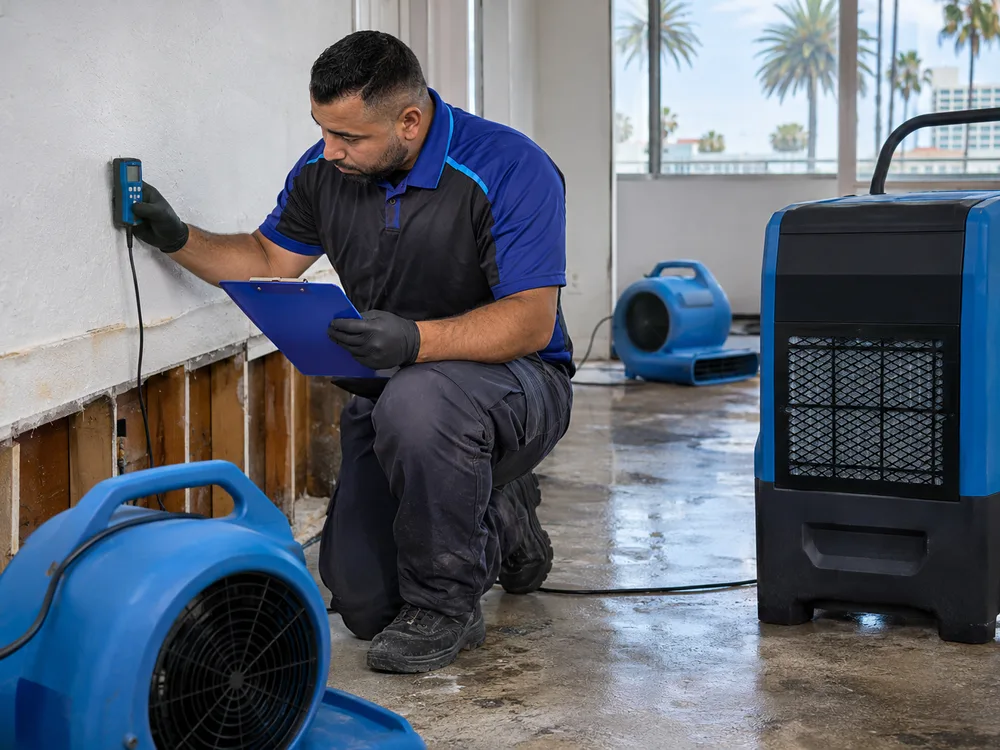
A mitigation visit begins with source and safety checks. Technicians then map visible and hidden moisture using tools such as pin or pinless moisture meters, thermal imaging as a screening aid, and hygrometers that measure air conditions. Infrared images can reveal temperature differences, but meter readings are needed to verify moisture.
Extraction equipment removes recoverable water before drying begins. Air movers increase evaporation at wet surfaces, while commercial dehumidifiers remove moisture from the air. The equipment layout may change as readings improve. When water has entered a wall or cabinet assembly, limited removal or targeted access may be needed to reach trapped moisture.
Mitigation is different from reconstruction. Its immediate purpose is to stabilize the affected area, remove unsalvageable wet materials when necessary, and dry the remaining structure to appropriate targets. Repairs such as replacing drywall, flooring, trim, or cabinetry generally follow after drying is verified.
A failed appliance hose, fixture connection, or pressurized pipe can release water quickly. The work includes stopping additional spread, extracting water, and checking nearby walls, cabinets, and flooring.
Water from a tub, sink, toilet, dishwasher, or washing machine can pass through seams and reach adjoining rooms. The water source and level of contamination affect handling and material-removal decisions.
Wind-driven rain or a roof opening can wet ceilings, insulation, and wall assemblies. The exterior source must be controlled before interior drying can be effective.
In apartments and condominiums, water may move vertically through ceilings or along shared assemblies. Prompt moisture mapping helps define the affected units and supports communication with owners or property management.
Shops, offices, and other occupied properties need a drying plan that accounts for access, customer areas, equipment, and operating hours without compromising safe mitigation practices.
A modest puddle can conceal moisture under floating floors, carpet cushion, baseboards, or built-in cabinets. Instrument readings help determine whether drying in place is practical.
We identify the reported source, review electrical and contamination concerns, and determine whether additional source control is required before work proceeds.
Technicians inspect adjoining surfaces and use moisture instruments to establish the boundaries of the loss. Photos and initial readings create a record of observed conditions.
Standing or recoverable water is extracted first. Materials that cannot be safely or effectively dried may be removed, while salvageable assemblies are prepared for drying.
Air movers and dehumidifiers are placed according to the affected area and material load. Conditions are checked during drying, and equipment may be repositioned as moisture levels change.
Final readings are compared with suitable dry reference materials or established drying goals. The record can include photographs, equipment information, and moisture measurements.
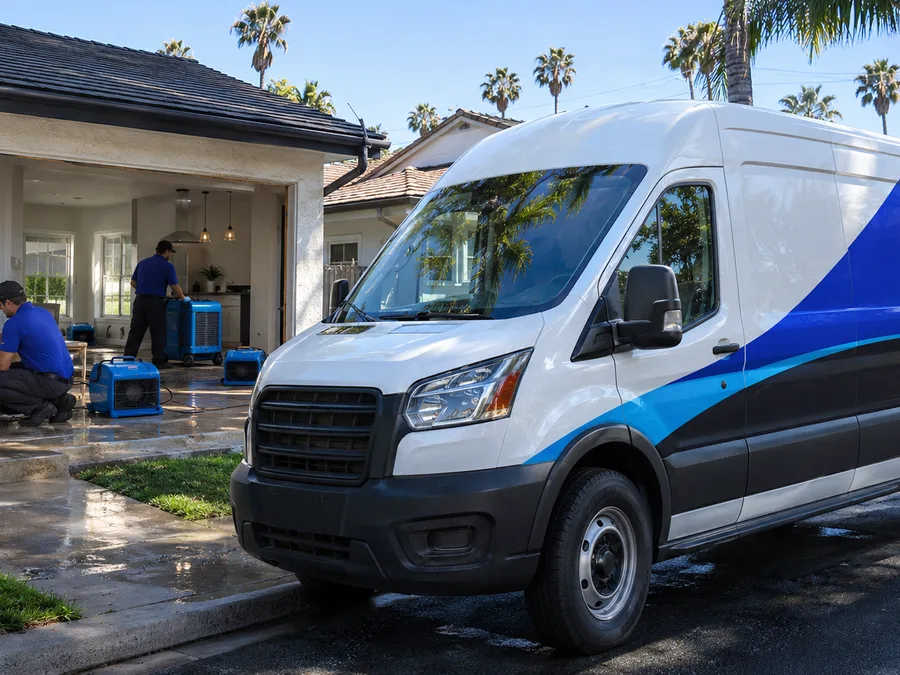
Long Beach properties range from older houses and duplexes to high-rise condominiums and commercial buildings. In neighborhoods such as Belmont Shore, closely spaced homes and limited exterior access can affect equipment placement and debris handling. Downtown towers require coordination for elevators, loading areas, building management, and units located beneath the original leak.
Older housing in areas such as Rose Park may contain multiple finish layers, plaster, or previous repairs that change how moisture moves and how access is created. Naples properties near canals can have tight access and require careful coordination around occupied homes. In California Heights, older wood-framed homes may need close inspection around original flooring, wall cavities, and built-in finishes after a plumbing leak.
Coastal air can carry more ambient moisture than hot inland air on some days, so opening windows is not automatically the fastest drying method. Indoor temperature and relative humidity readings guide the decision. Mechanical dehumidification provides more control and helps prevent outdoor air from working against the drying setup.
Water mitigation in Long Beach typically costs about $1,500 to $6,000 for a contained residential incident, while extensive water migration or contaminated water can raise the total beyond $10,000. These are general, nonbinding ranges rather than a quote.
Price depends on affected square footage, water category, extraction needs, equipment quantity, drying time, access, and material removal. Multi-unit coordination and water trapped beneath flooring or inside walls can add labor. The exact cost is confirmed after the affected areas are inspected and a mitigation scope is prepared.
Mitigation started early can contain the affected area and reduce prolonged exposure that leads to swelling, staining, microbial growth, and broader repairs.
Sudden accidental losses may qualify for coverage, depending on the policy and cause. Long-term seepage, maintenance issues, and groundwater may be excluded or require separate coverage.
Good mitigation documentation explains what was observed and what work was performed. Useful records may include source information, photographs, affected-room measurements, moisture readings, equipment logs, and an itemized scope. Keep invoices and damaged-item records, and notify the insurance carrier promptly if you plan to make a claim.
Insurance coverage depends on the policy and cause of loss. A sudden accidental plumbing release may be handled differently from long-term seepage, maintenance issues, groundwater, or exterior flooding. A mitigation contractor can document conditions and describe the work, but the insurance carrier decides coverage. Property owners remain responsible for authorizing work and understanding any deductible or uncovered amount.
Renters should notify the property owner or manager promptly. Condominium owners may also need to contact the homeowners association because responsibility can vary among the unit policy, association policy, and governing documents.
The sooner affected materials are assessed, the sooner extraction and controlled drying can begin. Describe what happened, when it started, and which rooms appear wet so the initial response can be planned.
Call Now (562) 337-3505Water mitigation should begin as soon as the source is controlled and the area is safe to enter. Water can continue moving beneath flooring and into wall cavities even after the visible puddle is gone. Long Beach apartments and condominiums may also require prompt checks of units beneath or beside the source.
Many contained incidents require several days of monitored drying, but the actual timeline depends on the materials, saturation, access, and indoor conditions. Drywall and exposed framing may dry differently from hardwood, insulation, cabinets, or moisture trapped beneath a floor. Equipment should be removed based on verified readings rather than a preset date.
Some wet drywall and flooring can be dried in place when the water is sufficiently clean, the materials remain intact, and moisture can escape. Removal is more likely when materials are contaminated, swollen, delaminated, structurally damaged, or blocking access to wet cavities. Meter readings and the assembly's construction guide the decision.
Mitigation documentation can be provided for an insurance claim, including photographs, readings, equipment records, and an itemized description of work. The carrier determines coverage under the policy. California property owners may select their contractor, while claim authorization and payment terms should be confirmed directly with the insurer.
Keep the building's climate system in its normal operating mode unless the mitigation team or an HVAC professional gives different instructions. Opening windows may introduce humid coastal air and reduce control over the drying chamber. Temperature, relative humidity, and equipment performance should determine the setup.
Occupancy depends on the water source, electrical safety, noise, heat, access, and which rooms are affected. A contained clean-water incident may allow partial occupancy, while sewage, widespread damage, or unsafe electrical conditions may require occupants to leave. Multi-unit buildings may impose additional access and operating-hour requirements.
Stop the source if you can do so safely, avoid wet electrical areas, and move dry valuables away from the affected space without entering hazardous conditions. Note when the incident began and take photographs from a safe position. Do not remove installed materials or discard damaged items needed for claim documentation until they have been recorded.
Tell Flood Damage Long Beach CA where the water came from, which areas are affected, and whether the source has stopped. We will outline the next steps for extraction, drying, monitoring, and documentation.