Water Extraction
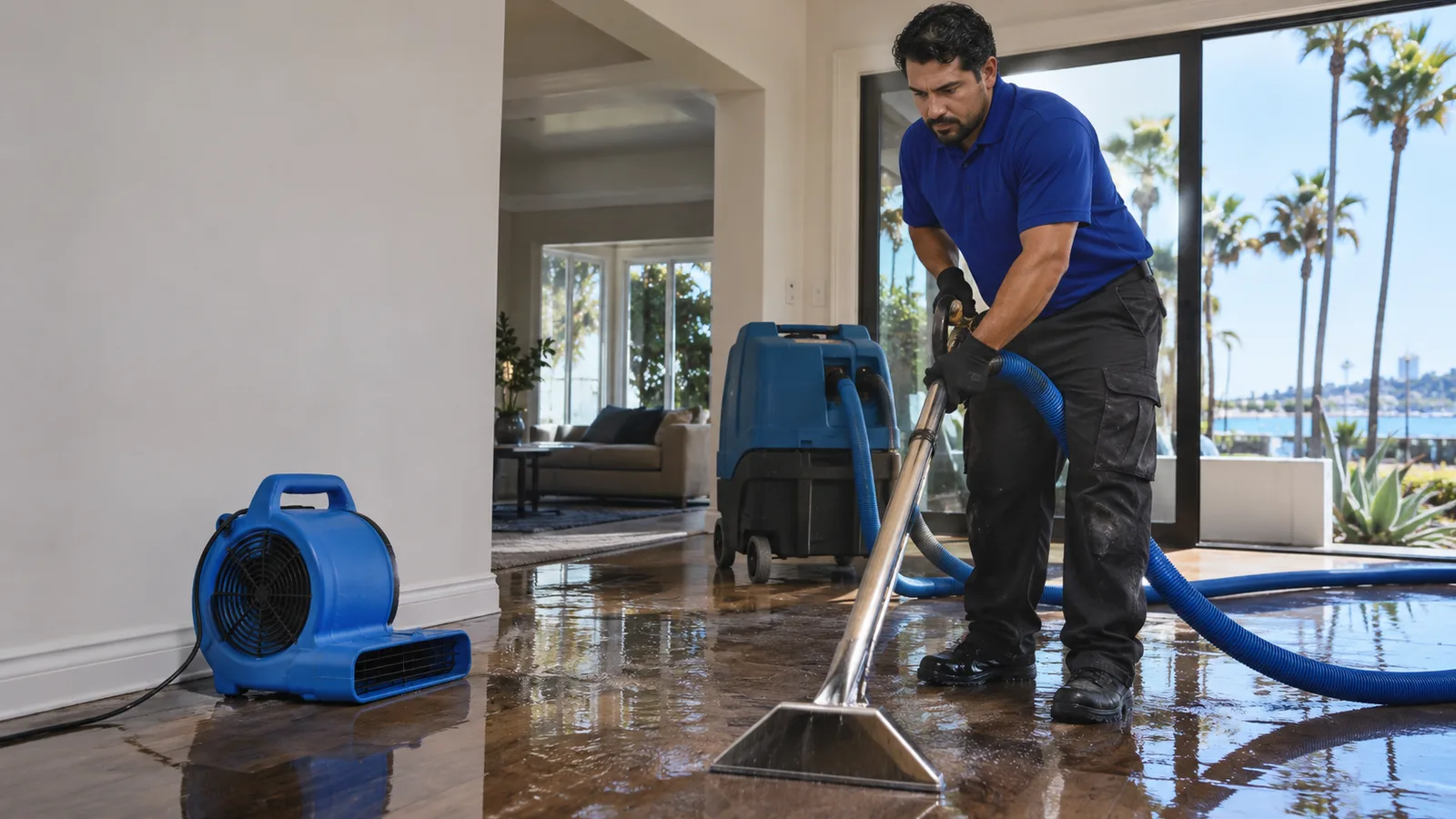
Portable or truck-mounted extraction equipment removes standing water from accessible flooring and other affected surfaces. Early extraction reduces the amount of moisture that drying equipment must handle.
Serving Long Beach, California & surrounding areas
Fast water removal, careful structural drying, and clear documentation for homes and businesses affected by leaks, overflows, or flooding.
Long Beach water damage can spread through flooring, drywall, cabinets, insulation, and wall cavities before the full extent is visible. Quick action limits migration, but effective restoration requires more than removing standing water.
The affected materials must be inspected, moisture must be measured, and drying equipment must be placed according to the conditions inside the building.
Flood Damage Long Beach CA handles residential and commercial water losses caused by appliance failures, plumbing leaks, toilet overflows, roof intrusion, and storm-related water entry. As Long Beach's flood damage specialists, we focus on finding where the water traveled, separating materials that can be dried from those that should be removed, and documenting progress until the affected area reaches an appropriate drying goal.
We know the Long Beach area really well. Belmont Shore homes may have tight access and closely spaced rooms, while Downtown Long Beach includes condominiums and commercial buildings where water can move between units or floors. In older neighborhoods such as Bluff Heights and Rose Park, plaster, wood flooring, built-ins, and layered finishes may require selective drying rather than broad demolition. Buildings near the coast also need drying decisions based on measured indoor conditions, not assumptions based on how a surface looks.
Portable or truck-mounted extraction equipment removes standing water from accessible flooring and other affected surfaces. Early extraction reduces the amount of moisture that drying equipment must handle.
Moisture meters, thermal imaging, and visual inspection help trace water into walls, subfloors, cabinets, and adjoining rooms. Thermal images indicate temperature differences and must be confirmed with direct moisture readings.
Unsalvageable drywall, insulation, flooring, or trim may be removed when contamination, deterioration, or trapped moisture prevents safe drying. Removal should be limited to the material that conditions require.
Air movers promote evaporation while commercial dehumidifiers remove moisture from the air. Equipment placement and operating conditions are adjusted using recorded temperature, humidity, and material readings.
Affected salvageable surfaces are cleaned according to the water source and material. Odor work follows removal and drying because fragrance alone does not correct wet or contaminated building materials.
Photos, moisture records, equipment logs, and an itemized scope can support communication with property managers and insurance representatives. Coverage decisions remain with the insurer under the applicable policy.
The source and condition of the water determine how cleanup should proceed. Water from a supply line may begin as Category 1, commonly called clean water.
Discharge from appliances or some overflows may fall into Category 2 because it contains more contamination. Category 3 water, including sewage and water affected by significant outside contamination, calls for stronger containment, personal protective equipment, removal, and cleaning measures.
Categories can change as water contacts materials or remains in place. A clean-water leak that sits inside a wall assembly should not be treated solely according to its original source. Porous materials exposed to sewage, such as carpet pad, insulation, and some drywall, generally cannot be restored through drying alone.
Water class is a separate concept. It describes the amount of water and evaporation load in the affected area. A restoration plan should account for both contamination category and drying class before equipment is selected. That distinction helps prevent two common errors: removing materials that could have been dried or attempting to save materials that should be discarded.
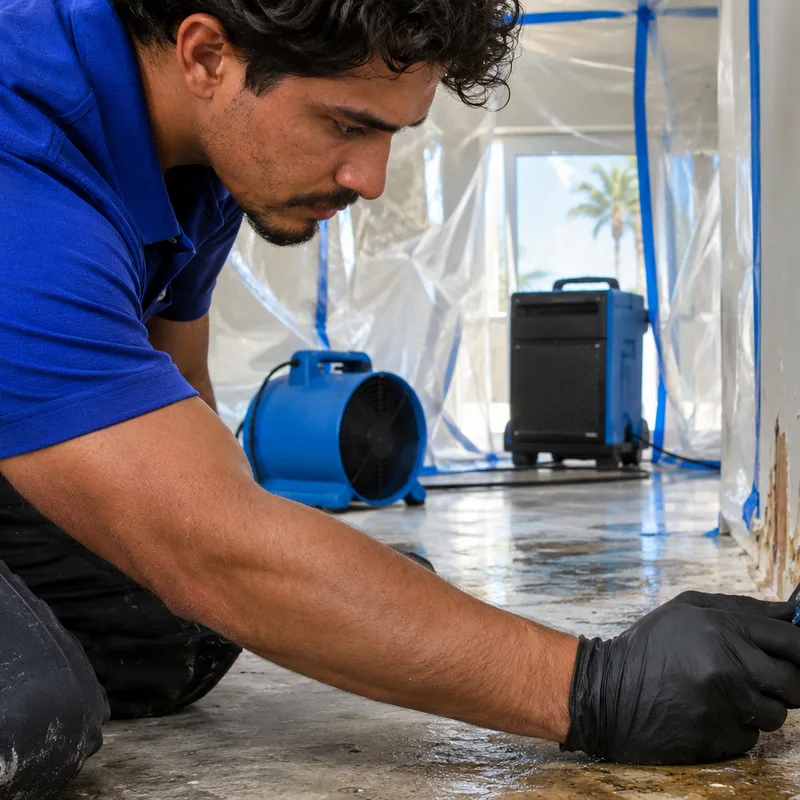
The first priority is to stop the water when it is safe and practical. The initial inspection also considers electrical exposure, sagging ceilings, contaminated water, slippery surfaces, and materials that may need special handling.
Visible damage rarely shows the entire water path. Readings are taken in the source area and nearby rooms to identify wet drywall, subflooring, cabinetry, insulation, and other materials.
Standing water is removed before focused drying begins. Contents may be moved or blocked in place, and containment may be installed to separate affected work areas.
Damaged or contaminated materials are removed selectively. If the property may contain lead-based paint or asbestos-containing materials, appropriate testing may be needed before disturbing suspect finishes.
Air movement, dehumidification, and temperature control are used to create drying conditions. Moisture readings are checked during the job, and equipment is repositioned or removed as materials respond.
Drying is completed based on documented material readings rather than appearance alone. The remaining repair scope may include replacing drywall, flooring, trim, insulation, or finishes removed during mitigation.
Water keeps moving after the visible puddle is gone. Arrange an inspection promptly so the affected area can be mapped and a clear mitigation scope can be prepared.
Call Now (562) 337-3505Long Beach has a mix of detached homes, older multifamily properties, high-rise residences, retail spaces, and industrial buildings. Each construction type changes access and drying strategy.
In Downtown condominiums, restoration may require coordination with building management, elevators, loading areas, and neighboring units. A leak on an upper floor can affect ceilings and wall cavities beneath the source even when the lower unit has little visible water.
Belmont Shore properties often have compact floor plans where contents and equipment placement require careful planning. Bluff Heights and Rose Park include older housing where plaster walls, original woodwork, and hardwood floors may respond differently than modern drywall and laminate. In Naples, ground-level living areas and custom built-ins can create concealed moisture paths around cabinets and wall bases.
Coastal humidity can slow evaporation when outdoor air is introduced without considering current conditions. Professional dehumidification creates a controlled indoor drying environment. For commercial properties, the plan may also divide the work into zones so unaffected operations can continue when safety and the building layout allow it.
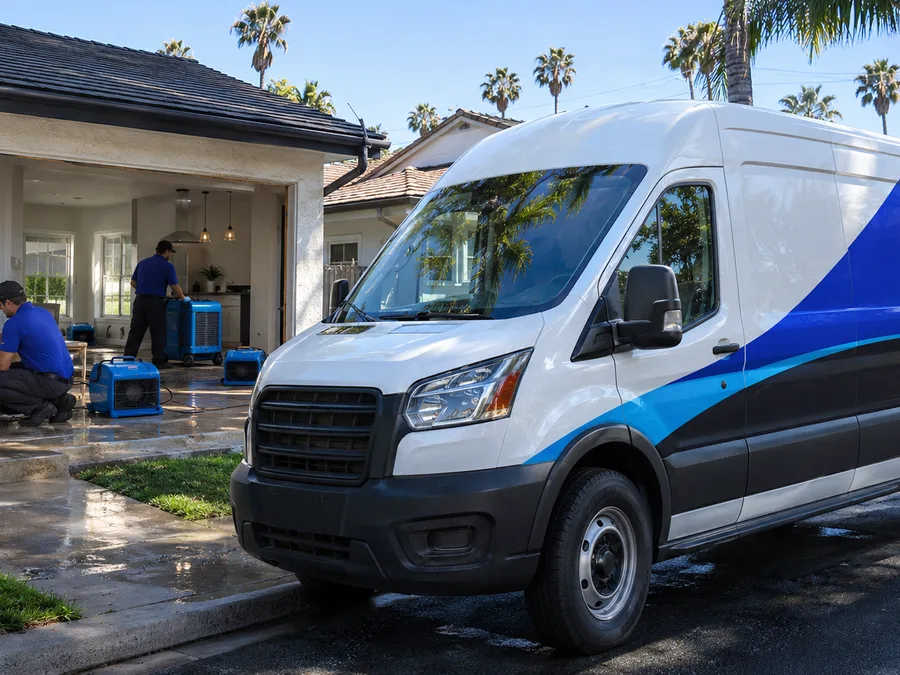
If water is entering the property, stop the source only when you can do so safely. Avoid rooms with standing water near outlets, appliances, electrical panels, or damaged wiring.
Do not enter an area beneath a sagging ceiling. Sewage and outside floodwater should be treated as contaminated, so keep people and pets away from the affected space.
Take photos or video from a safe position before moving items. Preserve damaged components or appliance information when practical, and note when the loss was discovered. If the property is insured, report the incident promptly and ask what documentation the carrier requires. Emergency mitigation may need to begin before a coverage decision is issued, particularly when delay would allow damage to spread.
Avoid painting over stains, installing new flooring, or closing damp wall cavities before moisture is checked. Household fans may move air, but they do not replace extraction, dehumidification, or contamination controls. Bleach is also not a complete answer for porous wet materials. The source, material type, and extent of exposure must guide the cleanup.
Water damage restoration in Long Beach typically ranges from about $1,500 to $6,000 for a contained residential loss, while extensive drying, contaminated water, or removal across several rooms can exceed $10,000. A small, promptly addressed clean-water incident may cost less.
Final price depends on water category, affected square footage, extraction needs, equipment days, access, and materials that require removal. Reconstruction is usually priced separately from emergency mitigation. Insurance coverage depends on the cause and policy terms. The exact cost is confirmed after an on-site inspection and written scope.
Starting restoration promptly can limit moisture migration, material deterioration, and microbial growth that may expand the repair scope.
Policies may cover sudden and accidental water releases, but exclusions, deductibles, and limits vary. Flooding from rising groundwater generally requires separate flood insurance, and the carrier determines coverage.
Emergency mitigation should begin as soon as access, safety, and crew availability allow. Before dispatch, describe the water source, affected rooms, building type, and any electrical or sewage concerns. Condominium and commercial work in Downtown Long Beach may also require access approval or coordination with property management.
Many uncomplicated drying projects take several days, but the actual timeline depends on saturation, materials, access, humidity, and whether water is trapped in enclosed assemblies. Dense plaster, hardwood flooring, cabinets, and layered construction can dry differently than exposed drywall. Daily moisture readings provide a better endpoint than a fixed number of days.
No, removal depends on contamination, physical damage, finish type, and whether the assembly can be dried effectively. Clean-water exposure may allow some drywall or wood flooring to remain, while sewage exposure usually requires removal of affected porous materials. Moisture readings and inspection findings should support the decision.
Coverage depends on the cause of loss and the terms, exclusions, and endorsements in the policy. Sudden plumbing failures are often handled differently from long-term seepage, maintenance issues, or rising surface water. A restoration company can document conditions and work performed, but the insurer decides coverage.
The main cost drivers are the affected area, water category, extraction needs, drying time, equipment quantity, access, demolition, contents handling, and cleaning requirements. Multistory buildings may add coordination and access costs. An inspection is needed before Flood Damage Long Beach CA can provide a written scope based on actual conditions.
Occupancy depends on contamination, electrical safety, noise, equipment placement, temperature, and whether essential rooms remain usable. A contained clean-water loss in one area may allow partial occupancy. Sewage, extensive demolition, or unsafe electrical conditions may require occupants to stay out of the affected area or leave temporarily.
Yes, persistent moisture creates conditions that can support microbial growth, so prompt extraction and controlled drying matter. Existing growth, odor, or prolonged wetting can change containment and removal requirements. Coastal outdoor humidity in Long Beach also means open windows are not a reliable substitute for measured dehumidification.
Tell Flood Damage Long Beach CA what happened, where the water traveled, and when it was discovered. The next step is an inspection, moisture mapping, and a practical scope for extraction, drying, cleanup, and necessary material removal.