Plumbing Leaks
Supply-line failures, appliance connections, drain leaks, and overflowing fixtures can wet cabinets, walls, subfloors, and rooms on lower levels.
Serving Long Beach, California & surrounding areas
Fast water removal, careful structural drying, and clear documentation for homes and commercial properties affected by leaks, overflows, or flooding.
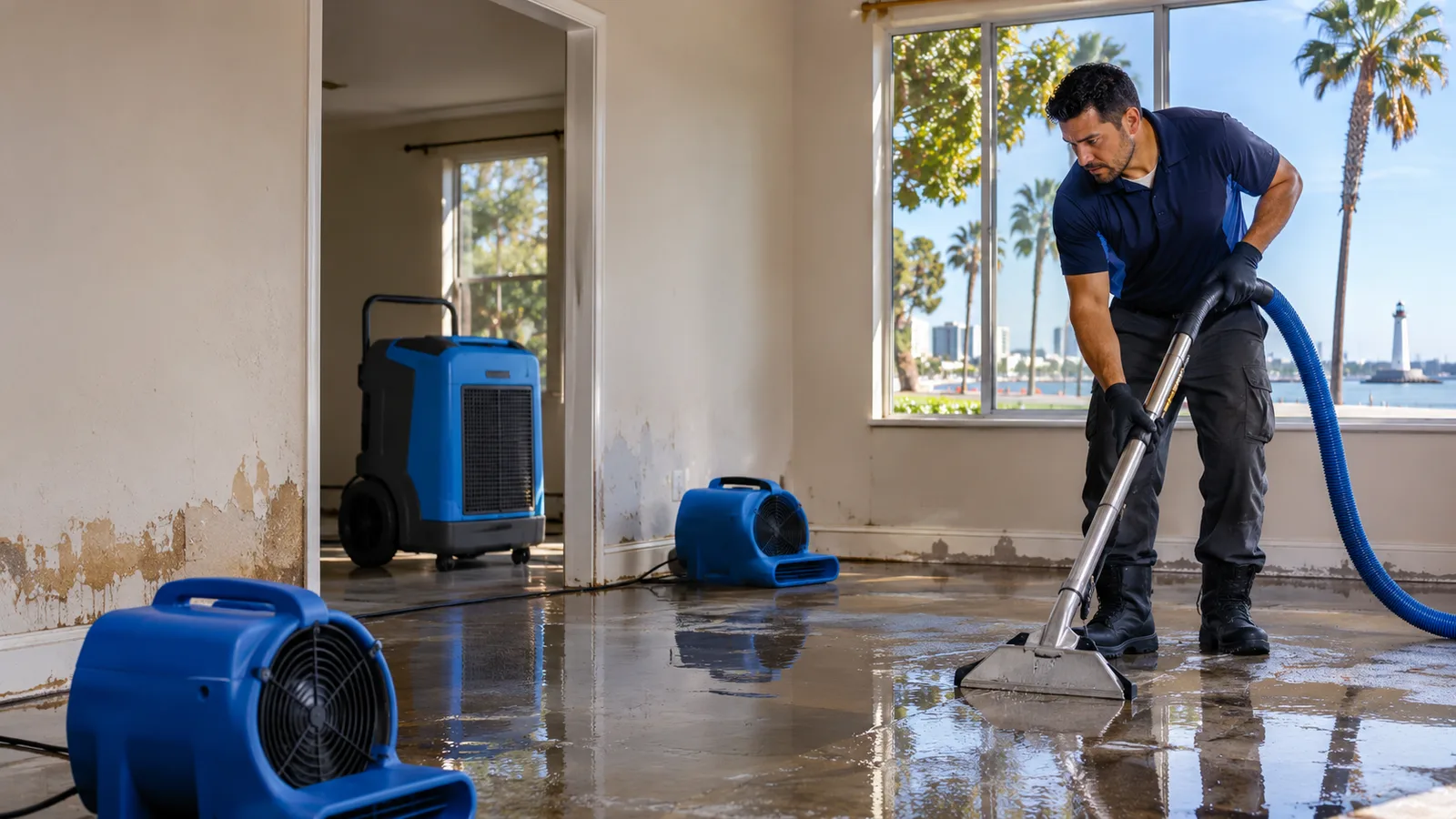
Water can move beneath flooring, wick into drywall, and collect inside wall cavities before the full extent of the damage is visible. Long Beach water damage restoration starts by identifying the source, checking how far moisture has traveled, and removing water that can still be extracted. Flood Damage Long Beach CA then builds a drying plan around the affected materials rather than relying on surface appearance alone.
Using professional extraction equipment, air movers, dehumidifiers, and moisture meters, Long Beach's local flood damage service handles the work with controlled drying and progress checks that show whether affected materials are moving toward an appropriate dry standard. If the source is still active, it must be stopped before restoration can proceed effectively.
Coastal humidity can slow evaporation, especially in closed rooms and wall assemblies with limited airflow. That makes equipment placement and moisture monitoring particularly useful in Long Beach. Prompt action can reduce prolonged exposure, limit avoidable removal, and provide clearer records if an insurance claim is involved.
The first priority is site safety. Water near electrical components, weakened ceilings, contaminated material, or slippery surfaces needs careful handling. Technicians assess the affected area before extraction and separate salvageable contents when practical.
Standing water is removed with pumps or extraction tools suited to the volume and access conditions. Carpeting, pad, baseboards, drywall, insulation, cabinets, and hard-surface flooring are then evaluated for moisture and contamination. Materials do not all respond the same way. Clean water from a recent supply-line leak may allow more drying in place than water from a sewer backup or outside flooding.
After extraction, air movers increase evaporation and commercial dehumidifiers collect moisture from the air. Moisture readings help track conditions in wood, drywall, and other assemblies. Unsalvageable materials are removed when drying them would be unsafe, impractical, or unlikely to produce a sound result. Cleanup may include HEPA vacuuming, surface cleaning, and antimicrobial treatment when conditions warrant it. Antimicrobial products are not a substitute for removing contaminated porous material or correcting the moisture source.
Supply-line failures, appliance connections, drain leaks, and overflowing fixtures can wet cabinets, walls, subfloors, and rooms on lower levels.
Wind-driven rain, roof openings, failed exterior seals, and surface water intrusion require extraction plus correction of the entry point.
Washing machines, dishwashers, refrigerators, and water heaters can release enough water to spread beneath nearby flooring and built-ins.
Sewage backups and some outside flood events require stronger containment, personal protective equipment, removal of affected porous materials, and detailed cleaning.
Offices, shops, restaurants, and multifamily common areas need a drying plan that considers access, occupants, inventory, and operating hours.
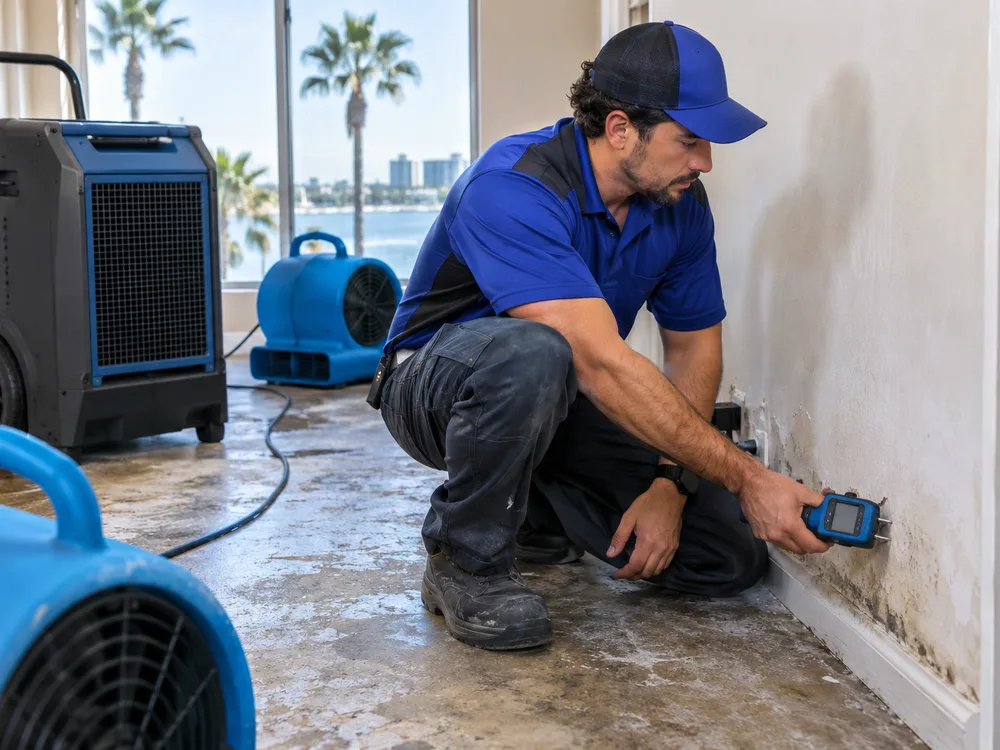
Thermal imaging may help locate areas for further testing, while moisture meters confirm whether materials are wet and track drying progress.
We inspect the affected rooms, identify visible hazards, discuss when the loss began, and determine whether the water source has been stopped. The water category, affected materials, and extent of migration shape the work plan.
Moisture meters are used to compare affected materials with appropriate reference areas. Photos, readings, and notes can document initial conditions and support conversations with an insurer or property manager.
Standing water is removed, accessible contents are relocated or protected when practical, and affected areas may be contained to control debris or contaminated material.
Decisions are based on contamination, structural condition, material type, and the ability to dry an assembly. Removal may expose wet insulation or concealed cavities that need direct airflow.
Air movers and dehumidifiers are placed according to the room layout and moisture load. Conditions are checked during drying so equipment can be adjusted and progress can be verified.
The affected area is cleaned as the scope requires. Final moisture readings provide a record of drying conditions before repair or reconstruction begins.
Long Beach properties include older homes, multifamily buildings, waterfront residences, and active commercial spaces. Each setting changes how technicians reach wet materials and manage drying equipment.
Belmont Shore has closely spaced homes and businesses where equipment access, parking, and noise planning can affect setup. Naples properties may have finished lower-level areas and built-ins that require careful moisture checks after water enters. Downtown Long Beach has apartments, condominiums, and commercial occupancies where water can migrate between units or floors, making coordination with building management important. Bixby Knolls includes established homes where plaster, wood flooring, and older assemblies may need a slower, material-specific evaluation. In Alamitos Beach, dense multifamily housing can require access planning and containment around shared areas.
A surface that feels dry may still hold moisture underneath. Wood floors can trap water above a subfloor, cabinets can conceal damp drywall, and shared walls can carry moisture beyond the room where the leak was first noticed. A proper inspection follows the water path instead of stopping at the visible stain.
Water category affects what can be cleaned, what should be removed, and which protective measures are needed. Category 1 water begins from a sanitary source, such as a supply line, but it can deteriorate after contacting dirty materials or remaining in place. Category 2 water contains enough contamination to present a health concern. Category 3 water is grossly contaminated and includes sewage and certain forms of surface flooding.
The source alone does not settle every material decision. Time, temperature, contact surfaces, and the amount of migration also matter. Porous materials affected by heavily contaminated water are commonly removed rather than dried for reuse. Hard, nonporous surfaces may be cleaned and disinfected after soil and debris are removed.
Do not enter water that may be in contact with electrical equipment, and do not disturb a sagging ceiling. If sewage is involved, keep people and pets away from the affected area. Photos taken from a safe position can preserve initial conditions, but personal safety comes first.
Water damage restoration in Long Beach typically ranges from about $1,500 to $6,000 for a contained residential loss, while extensive drying, contaminated water, or removal across several rooms can exceed $10,000. A small, promptly addressed clean-water incident may cost less.
Final price depends on water category, affected square footage, extraction needs, equipment days, access, and materials that require removal. Reconstruction is usually priced separately from emergency mitigation. Insurance coverage depends on the cause and policy terms. The exact cost is confirmed after an on-site inspection and written scope.
Starting restoration promptly can limit moisture migration, material deterioration, and microbial growth that may expand the repair scope.
Policies may cover sudden and accidental water releases, but exclusions, deductibles, and limits vary. Flooding from rising groundwater generally requires separate flood insurance, and the carrier determines coverage.
A prompt moisture inspection can show where the water traveled, which materials may be saved, and what needs to happen first. Describe the source and affected rooms so the response can be planned around current conditions.
Call Now (562) 337-3505Water removal and moisture assessment should begin as soon as the property is safe to enter and the source is controlled. Water can spread beneath flooring and into wall cavities within a short period. Long Beach's coastal humidity can also slow natural evaporation, so waiting for surfaces to air-dry may leave concealed materials wet.
Many contained water losses require several days of active drying, but the timeline depends on the materials, moisture depth, room conditions, and whether concealed cavities are involved. Dense wood, layered flooring, insulation, and limited airflow can extend the process. Moisture readings, rather than a fixed schedule, determine when drying equipment can be removed.
Some clean-water-affected materials can be dried, while contaminated, deteriorated, or physically damaged materials often require removal. Drywall may be retained when the water is sanitary and the assembly can be dried effectively. Carpet pad, swollen composite flooring, wet insulation, and porous material exposed to sewage are less likely to be suitable for reuse.
Insurance often covers sudden and accidental water damage, but coverage depends on the cause, exclusions, maintenance history, and policy terms. A failed supply line may be treated differently from long-term seepage, sewer backup, or outside flooding. Photos, moisture records, equipment logs, and an itemized scope can help an adjuster review a Long Beach claim.
Temporary relocation depends on safety, contamination, noise, heat, equipment placement, and whether essential rooms remain usable. A contained clean-water loss may allow occupants to stay in another part of the property. Sewage, electrical hazards, major demolition, or extensive equipment can make relocation the safer choice.
Stop the water source if it can be done safely, avoid electrical hazards, and keep people away from contaminated water or unstable materials. Do not use a household vacuum to remove water. Take photos from a safe location and identify when the incident started, which rooms are affected, and whether a property manager or insurer has been notified.
Water migration can be documented with photographs, moisture readings, affected-material notes, and a work scope. This is particularly useful in Downtown Long Beach and other multifamily areas where water may involve shared walls, common plumbing, or adjacent units. Owners, tenants, building management, and insurers may each need different records.
Tell Flood Damage Long Beach CA what happened, when it started, and which areas are affected. We will help establish the next steps for extraction, drying, cleanup, and documentation.